The payment protection insurance fraud committed by virtually every UK bank in existence is not only the biggest financial fraud in history. It directly affects the bloodline of the UK economy. With over £25 billion in estimated compensation for the entire United Kingdom, the economy could actually improve if the entire package is finally addressed to the country.

Over £15 billion had been paid out to about 380,000 customers mis sold the nefarious insurance policy. However, the Financial Ombudsman states that the numbers are still growing with them receiving at least 2000 PPI claims daily. The FOS estimates that banks need to redress at least 4 million more PPI claims, which means that the end of the PPI fiasco is still far in sight.

However, in 1997, the windfall gains of customers because of the de-mutualisation of building societies might happen similarly once all mis sold PPI is paid back. The de-mutualisation allowed Halifax to become a PLC in 1997 and allowed some 7.5 million customers to receive at least £1500 worth of shares. This strongly improved the economy with more car registrations and improved customer confidence.

Experts are seeing a decrease in car registrations in today’s economy, but from 2011, car registrations increased by 9.3% in 2012. However, the same might not happen as most people may use their PPI refunds to repay their loans, mortgages and credit cards, which might slowly increase the economy, but not as well as 1997’s economic achievement.

Now, you might have fulfilled your residency and property ownership rights requirements in Malta, and you’ve chosen rental properties as your business. As a landlord, you’re bound to fulfil certain responsibilities you have to your tenants namely the following.

1. House Keys
As the owner of the property, you have a master key to the house, but your tenants also need to have their own house keys. If you want them to treat the property as their primary home in Malta, you will need to provide them a set of keys.

2. Disruption
As a landlord having master keys, you are not allowed to disrupt you tenants. Authorities will also count it as a violation if you enter your property rented by a tenant without their permission even if you are using your master key.

3. Repairs and Renovations
As the landlord, only you have the right to repair and renovate the different parts of your home. If your tenant complains about your property’s water systems, HVAC or gas lines, you must address this as soon as possible. All renovations, including modifying the property, even just changing the paint is your sole right, not your tenants’.

4. Monthly Charge
It is also your responsibility as landlord to collect your dues per month by informing your tenants. You have the right to evict them from the house if they do not provide what is due.

5. Safety
As the landlord of your properties, you must ensure that your tenants are in no immediate danger in living in your properties. This includes at least the 500m area around the house is completely safe.

If you’re looking to purchase a property in Malta, it’s feasible to also start a business in the country. Malta is a country rich with oil and minerals. Limestone is a primary export product of the country. Existing industries in the country include tourism, tobacco, aviation, financial and information technology services. Here are a few things you need to know if you want to open good business in Malta.

1. Tourism
Malta is a Mediterranean country and is a great tourist spot for both western and eastern tourists. Malta’s tourism is quite in its prime and taking advantage of this height is important. Look for market gaps in their tourism. For example, if you see somebody selling memorabilia, you could also sell certain kinds of memorabilia, but remember that it must be unique and must fulfil a certain gap.

2. Trade Competition
Know your competition before you enter certain industries. For example, if you’re entering the cotton and tobacco industry, there are at least three or four factories already doing the same thing. You’ll need to look for cotton and tobacco farmers and it will be difficult if they are already taken. Rental properties for tourists are great ways; but you’ll need to get approved for residential property in Malta first.

3. Know the Public Offices for Trade and Commerce
You must consider securing your trademarks such as your company name, logo and colour scheme, your patents and copyrights. Look for the Commerce Department of Malta. You could choose to register your company on your own, or you could hire a company that could incorporate your company into the system quickly for a fee.

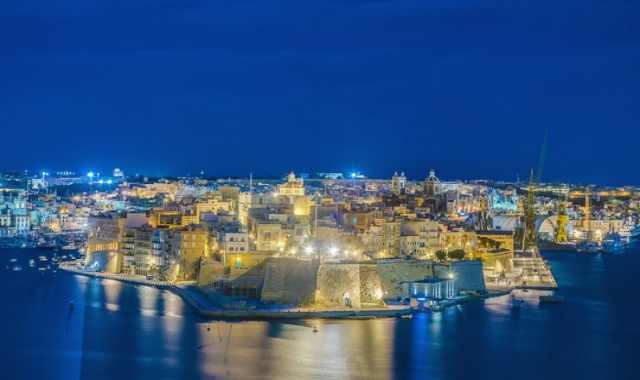
Malta is a wonderful place to spend a vacation or live in for the rest of your lives. Like any country, Malta has a very rich history. This explains why its architecture is beautiful, scenic and clearly historic. Many tourists interested in monumental structures and architecture take interest in Malta because of its European-Mediterranean look.

Malta’s architecture derives from the use of soft globigerina limestone, which most of the island’s buildings are made out of. Of course, these structures make use of modern bricks, cement, foundation practices and other materials. The globigerina limestone does not yield to seasonal changes, which makes it a good and unique building material.

Experts trace the limestone’s history back to 3,000 BC during the Neolithic period. The limestone could be weathered to have the colour of natural sandstone and can be sculpted down to hairpin detail.

Malta’s architecture, aside from the stone, also derives from the Baroque period. Baroque utilized wide spaces and high ceilings common in most cathedrals and churches. Experts believe that Malta was under Roman rule during its reign and this is what led to the development of Baroque-style structures, to which the people of Malta lay an influence of the Mediterranean feel in architecture.

Malta has a long history of military strength starting from medieval knights to serving as a fortified base to defend against invaders. Italian military engineer Pietro Paolo Floriani strengthened the defences of the country and protected Malta from any invasion.

1. Ordinary Residence
Individuals must live in the island for more than six months. There is no minimum value property requirement for non-residents when shifting from a high-tax jurisdiction to a lower tax overseas country and it is available to all nationals in the world. However, the qualifying criteria varies if the applicant wishes to be a resident in Malta as an EU national or a third country national, which may prove to be easier or more challenging depending on their circumstances.

2. Long term Residence
Long term residence status can only be given to Malta ordinary residents who have lived five years in the country or more. This means that the resident lived in Malta for five years and has not left the country more than six months during this term.

3. Education Terms
Malta can provide temporary residence for overseas students who are having education in any Maltese Private School, College or at the University of Malta. Minors will need to stay with a legal guardian for accompaniment. The guardian can also apply for a temporary Malta residency. The individual must also confirm that they are receiving stable income and has a good residence in Malta.

4. Temporary Residence
Like students attending Maltese education, anybody who can declare their intentions of staying in Malta can have temporary residence as decided by the government. Temporary residence can be granted to individuals with no intention of permanent residence and have not stayed more than 183 days consecutively in the country.

If you’ve been enticed by the quality of life and the luxuries that await you living in Malta, you need to know the process of how to purchase a property in Malta. There is no property tax in Malta because its citizens believe in buying property rather than renting it. Here are the first few things you need to know when purchasing Malta properties.

1. Negotiations AKA “Kovenju”
Malta calls the Preliminary Agreement between property buyer and seller as Kovenju, which is essentially an agreement that concludes that the buyer and seller made a transaction in a date they established. Upon signing the Kovenju, the property buyer will need to pay 1% provisional stamp duty, which would be counted in the full 5% due when the final deed and a final deposit amount (which is 10% is agreed upon. The documentation of the transaction would entail notary public services to verify the legal title and that the property is clear for selling, and that all requirements for buyers and sellers are fulfilled.

2. Identifying as a Primary or Secondary Home
Buyers can choose to nominate their properties as their foremost home in Malta or as a secondary property that could be used for business. For primary homes, a buyer must have residence in Malta for five years before they can declare the residence as a primary home. They can purchase the property, but not declare it as a primary home. Secondary homes need not the minimum residence requirement, but will need to pay for an Acquisition of Immovable Property permit to secure the property.

3. Income Tax
Malta has no property or wealth taxes, which makes it plausible to rent out the property if it is a secondary home. The property, if rented out, will provide a tax revenue of 15% from the property profits.

Malta is a South European country near Sicily and Tunisia and is one of the world’s smallest countries on par with South American countries. Malta has great historical significance dominated by different countries until its last captor, the United Kingdom, finally ended its reign in the country in 1964. The country has a good economy, but that is just one reason why you should stay and get a property in Malta.

1. The Mediterranean/ South American Vibe
Many tourists find South America as the foremost “summer vacation spot” because of its tropical atmosphere. In Malta, you could have the same atmosphere and scenic sunsets, yet have the best weather of having 5 hours of sunshine a day. The tropical vibe could visit by the morning with the country’s lush tropics, then end up with a Mediterranean mood as the sun sets.

2. Architecture
Because of its rich history dominated by Phoenicians Greeks, Christian Crusaders and later the British, Malta’s culture is very diverse as it is very endearing. Greek architecture is interspersed with Mediterranean and British architecture throughout history. Many of the oldest manmade structures in the world, such as the Ggantija, exists in Malta. It’s Roman heritage explains the mosaic floors and classical architecture that also exist in the country.

3. Economy
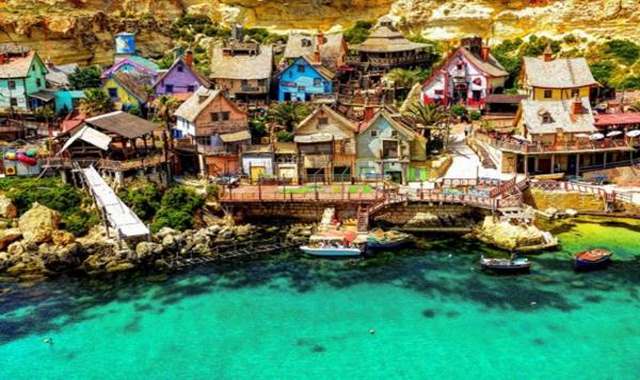
Malta has an advanced economy that depends on cotton and tobacco exports. It ships to different countries all over the world through its shipyards. It’s primary resources are limestone and it produces 20% of the food it consumes. Film production is a booming business in Malta because of its scenic locations visited by different film producers and companies. It also has no property tax.

Every UK citizen has the right to file for accident claims if they suffer injuries when it is not their fault. With high risk of injuries and loss of wages, an accident claim can provide victims the support they need. However, the Ministry of Justice plans to reduce the number of fraudulent accident claims by abolishing the win/lose no fee accident claims system and replacing it solely with the no win no fee accident claims system.

With only the no win no fee accident claims system, victims may be undercompensated because they need to pay 25% of their compensation to their legal representatives. In a win/lose no fee situation, legal representatives take their fees and success fees from the MOJ or the insurance company while victims keep all their compensation. For serious cases, such as severe car accident injuries or medical negligence, having legal help may not be an option, allowing insurers and offenders to pay less.

The MOJ imposed the new claims system because claims management companies and personal injury lawyers brought in a great number of claims, with some appearing to be fraudulent or exaggerated, yet bound by legal expertise, were able to earn great compensation. To lessen the number of claims management company-dependent claimants, they enforced the no win no fee claims system back on track.

However, personal injury lawyers say that it is unfair for victims because without legal advice, insurance companies and offenders can just offer a lump sum payment, which will leave customers undercompensated. Critics agreed with their statements, given that the implementation of the no win no fee would leave victims at a lose-lose situation.

Analysts and experts said that refunding PPI repayments to customers can cost banks more than £25 billion in total just for this year. Currently, £14 billion is the total of the PPI compensation package for the United Kingdom, which is already staggering. However, experts say that the financial industry underestimated their mis selling activities for the past decade.

PPI is an insurance product designed to repay loans, mortgages and credit cards should a customer get sick or become unemployed. Because of its many exceptions and the abusive selling practices of some UK banks, PPI became widely mis sold to many people who did not need the insurance or were ineligible for its terms of use. A PPI claim can be made through the use of  a PPI template letter or seeking the aid of legal experts such as claims management companies.

Experts said that the amount of £25 billion is probably not the final amount of the PPI compensation package; some small detail will lead to the increase of this staggering total. However, they said that it is truly one of the biggest recompense amounts for a financial scandal, putting PPI mis selling as bigger than the pension scandal years ago.

Lloyds recently set aside £1 billion more for PPI recompense, bringing its total compensation to £6.3 billion, the largest of all four major UK banks. The Financial Services Authority recently penalized the bank for an “inadequate” PPI repayment system that cost around 240,000 customers to wait for more than 28 days to six months in getting their compensation.

Credit unions are the first stop of any customer who finds their credit scores inadequate to get banks to finance them. However, credit unions only have limited funding, which is why they can only choose select customers they can finance. If you want to get an affordable financing from a credit union, take note of the following.

1. Credit Scores

You might have a low credit score, but most credit unions will not consider your credit score. Instead, they base it on your financial capability, employment stability and current financial capability. You will be asked for an interview with one representative.

2. Common Ground

As credit unions have smaller vaults than banks, they select customers who share a “common ground” with them in terms of profession, race, nationality, ethnicity or industry. Try to find your own common ground first before heading to apply for a mortgage or any financing with a credit union.

3. Limits

Credit unions can only provide you a certain amount when it comes to home, car or any type of financing. It might not promise that it can pay for your item in full, but it can certainly promise you lower interest rates and flexible repayment options. You even have the option to pay for your refinancing with a small top-up amount with your regular repayments.